Is this vibe coding?
Yes, for a company. Your people describe the app and an AI agent writes it, and nobody has to review that code line by line. The difference from vibe-coding tools for individuals: IT decides who gets each app's roles and permits every link beyond it by name, and the platform enforces that whatever the code does.
Do we have to use AI to build apps?
No. Apps are ordinary TypeScript and people write them too. AstonDB was designed so that code written by an AI agent is safe to run, and the package manuals are written so that an agent like Claude Code can follow them.
Can we use our AI assistant with the apps?
Yes, that is what it is built for. Anyone can connect an assistant that supports MCP to one company address and sign in with their usual account. The assistant can then look things up and make changes in the apps you have access to; changes are marked as such, so it can ask you to confirm them first. It never sees more than you do, and it never needs a password or key copied into it.
Which AI assistants work?
Any assistant that can connect to a remote MCP server with sign-in, for example Claude, GitHub Copilot, VS Code or opencode. The assistant registers itself, the person confirms the connection and signs in with the company account. A built-in check tells them the connection works even before any app has published a tool.
Who decides what the AI may touch?
The same people as for the browser. The app's author publishes an operation or a job to AI with one line in the contract; what is not published, no assistant can call. The admin decides who has which app and role. An assistant then uses exactly what its person may, and nothing of the administration.
Which frontend framework do we need?
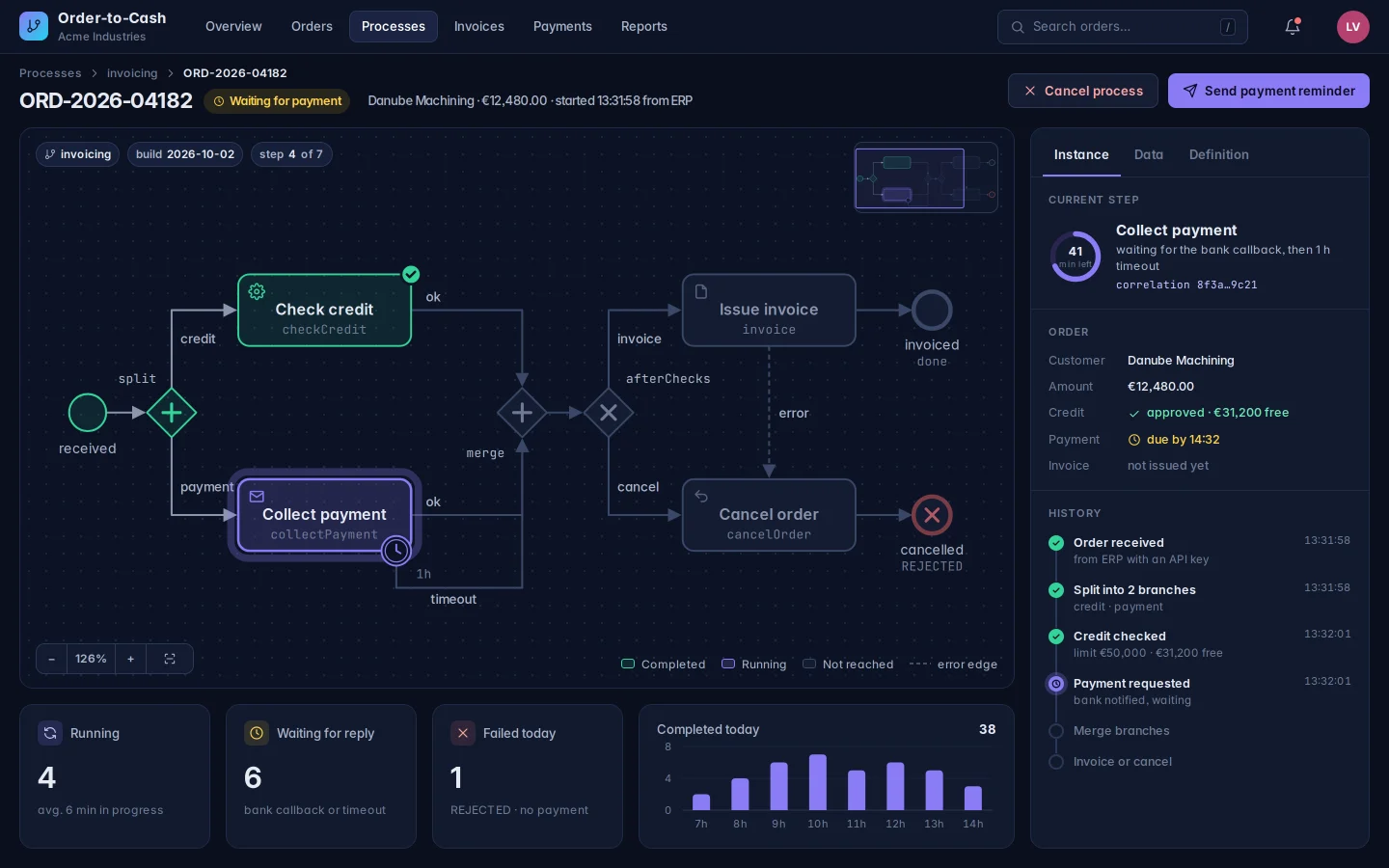
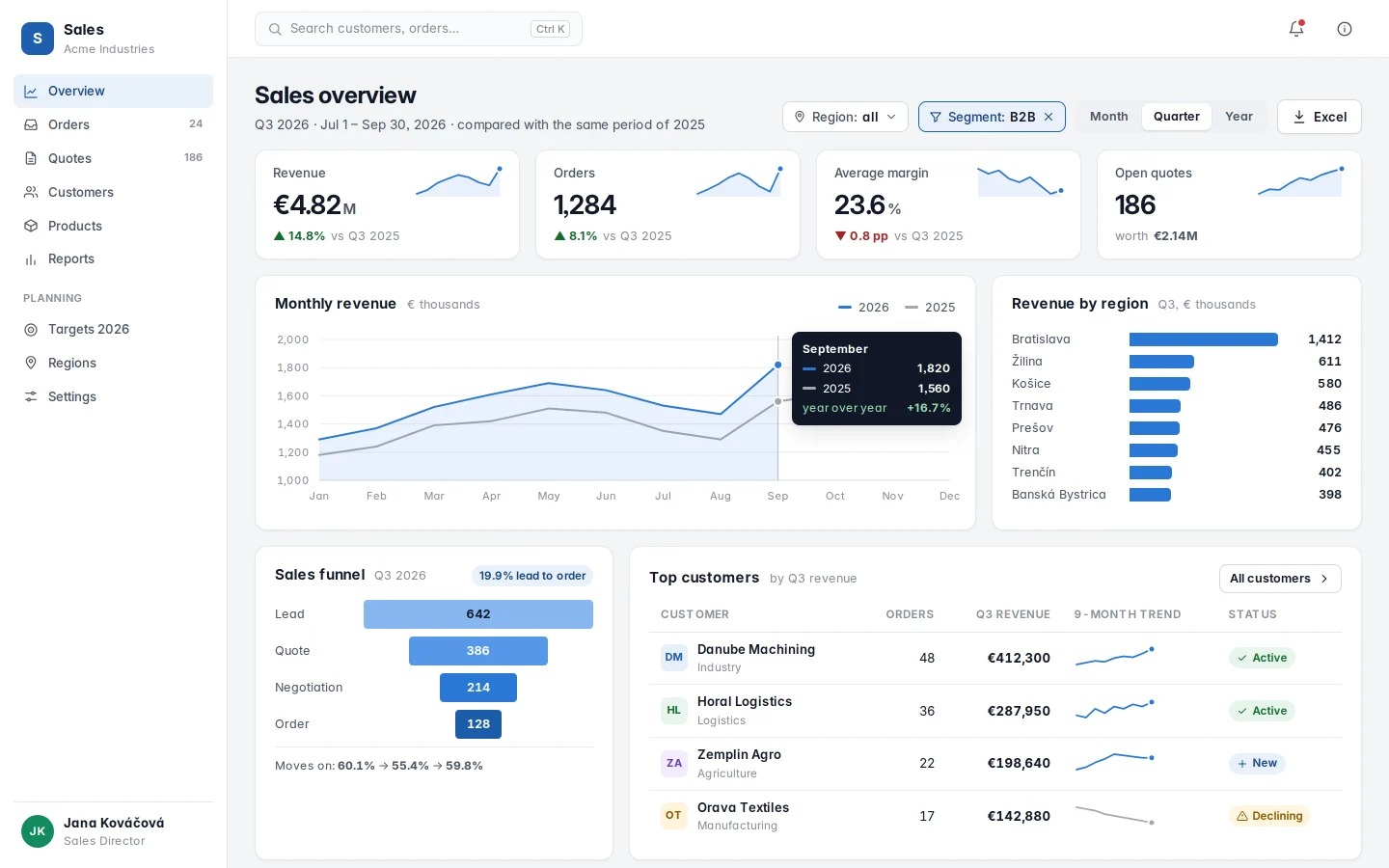
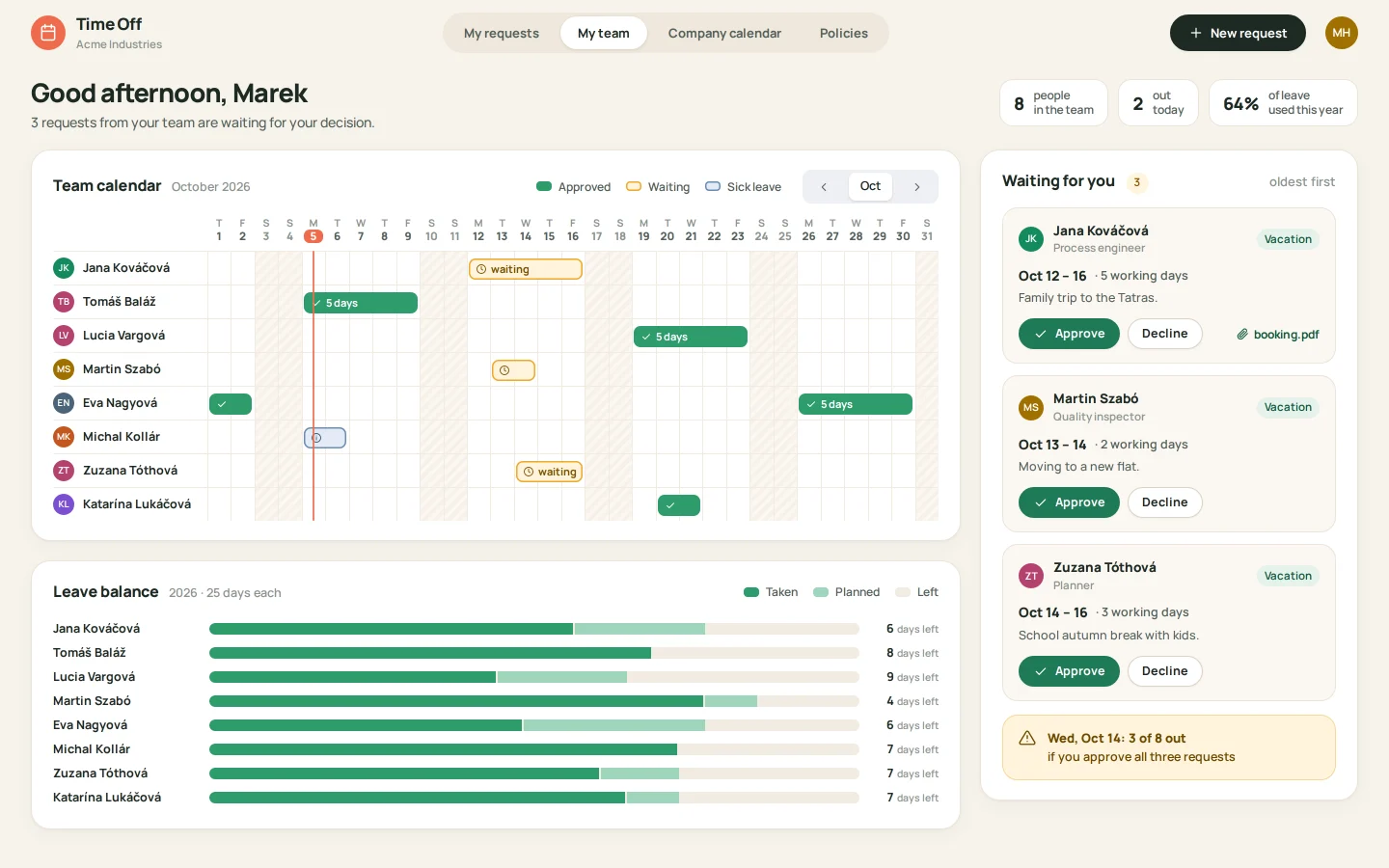
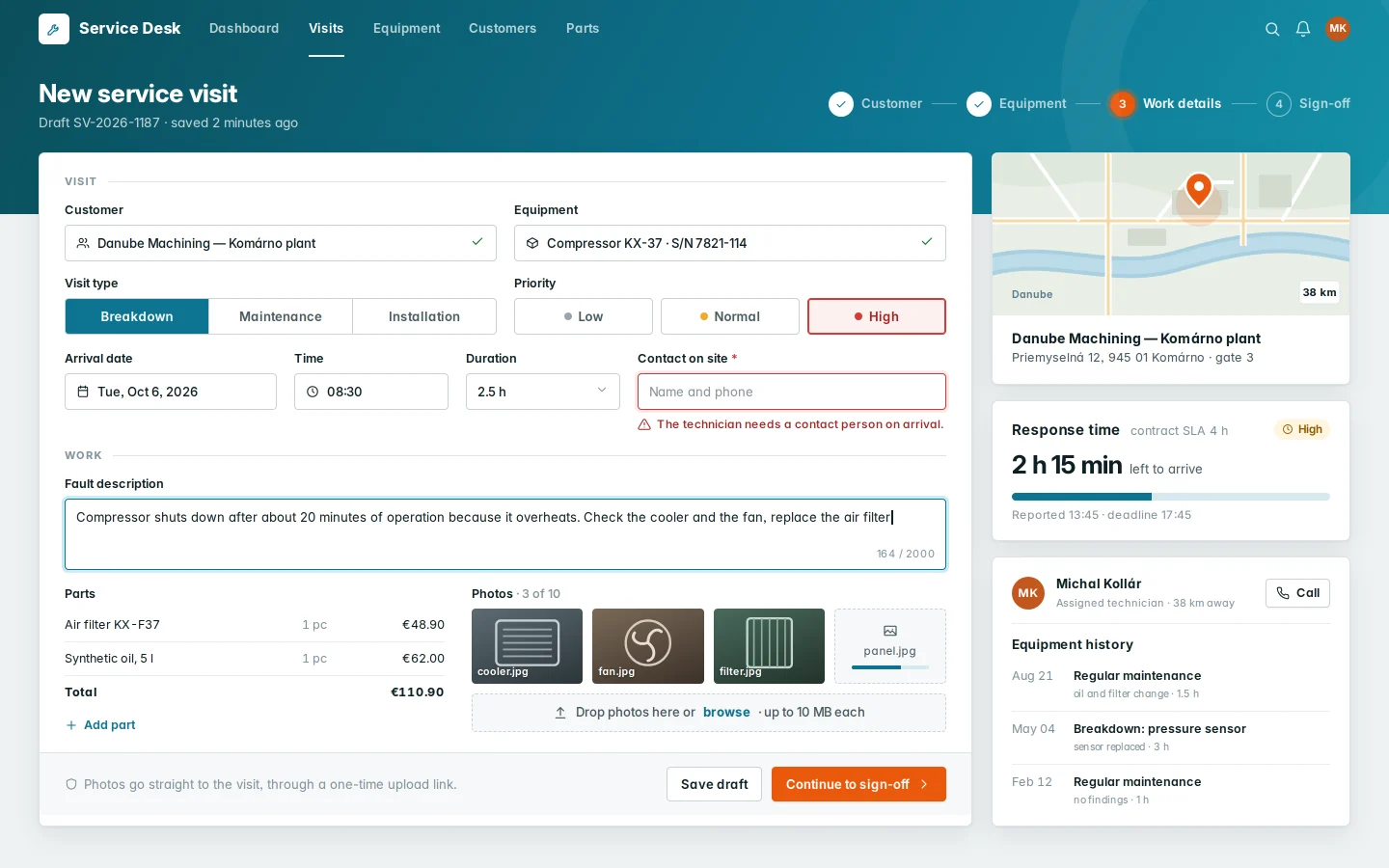
None in particular, and an app does not need one. A frontend is a folder of static files built with any tool, which the gateway serves at the app's address. The demos on this page each have a different look.
Can apps talk to our ERP and other systems?
Yes, in both directions. Outbound, a job calls fetch to hosts the admin has permitted, with credentials and OAuth tokens from the platform's secure store. Inbound, another system calls a web job with an API key.
Who decides what an app may reach?
Your admin. The contract can only ask: for an outside host, a job of another app, a list of people, an event. Each request is a row in the app's detail that the admin permits or denies by name, and the decision applies at once, without a redeploy. A request without a permit never blocks a deploy; that one door simply stays shut.
Can apps work with each other?
Yes. An app can call a job or an operation of another app and react to changes in its tables, each with a permit. The call goes as the signed-in person, and the other app checks that person's roles as if they had clicked. A job whose author allows it can also be called on behalf of the app, for example from a nightly schedule. When the work takes minutes or hours, the call need not be waited for: the asking app finishes, and the answer arrives later in a job of its own. The admin sees for every app which other apps can reach it.
Can an app act for the person in our other systems?
Yes, when your company login is set up for it and the admin permits it for that app. The job gets the person's own access token from the company login and calls the other system in their name, with exactly the rights that person has there. The token lives only as long as their login, in the browser or through their AI assistant.
Can we automate administration?
Yes, with an admin app: an app that hands out roles, sets permits and secrets and reacts to every change in the platform, from its own screens or on a schedule. Only admins can upload and open it, and it reaches other apps and outside hosts only through permits a human admin gives it.
What happens when a deployment goes wrong?
The deployment is rejected with all findings and the previous version keeps running. Migrations run in one transaction, so a failed one leaves the schema as it was. Recent builds stay in the admin, ready to roll back to.
Does one app's bug affect the others?
Each app has its own process, schema and database role. A job that runs too long stops its own app's process; the other apps keep working.
How is it licensed?
The packages app authors use (@astondb/contract, @astondb/executor, @astondb/deploy and @astondb/create-app) are on npm under the MIT license. Talk to us about running the platform.
 AstonDB v5